The Fast of the Tenth Month
by Rev. Cav. William Rock, FSSP, SMOCSG
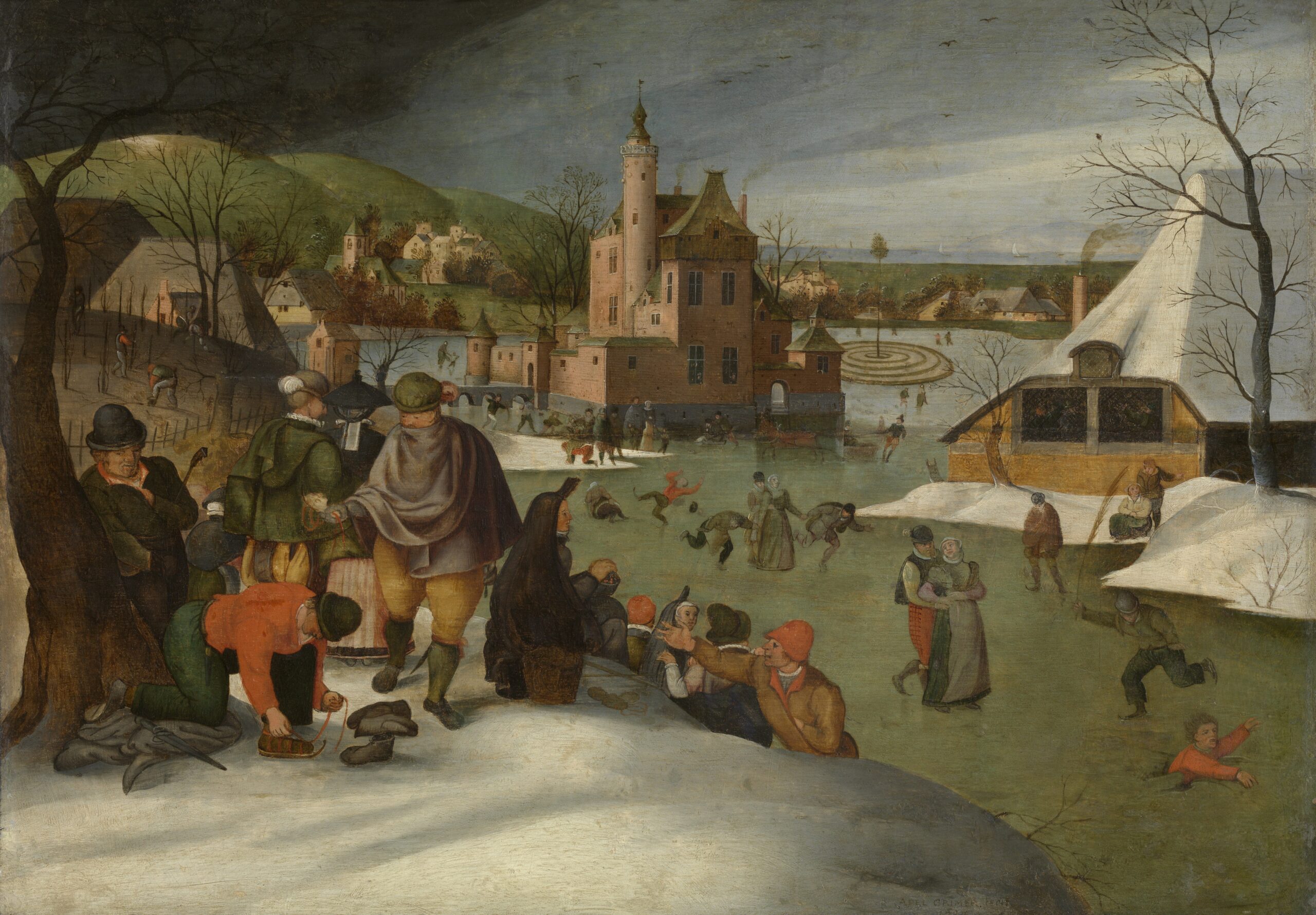
Before there was Advent, there were the precursors of Advent, the Greater Ferias, the Church’s response to Saturnalia, and the days of the Fast of the Tenth Month, better known today as the Ember Days of December.1 With respect to their origin, the Ember Days seem to be a christianization of Roman agricultural celebrations with the December Ember Days being the christianization of the feriæ sementivæ,2 the festival after sowing,3 “for the seeding.” Lest there be any confusion regarding calling the December Ember Days the days of the Fast of the Tenth, and not the Twelfth, Month, it is important to note that the Roman calendar, prior to the reform under Julius Caesar (d. 44 B.C.), originally marked the beginning of the year in the spring with March being the first month,4 thus making December the tenth, hence the name (decem, “ten”).5 And while December was not the tenth calendar month at the dawn of Christianity, it was still the tenth month by name.
For those who may be unfamiliar, the Ember Days are four sets of three days (Wednesday, Friday, and Saturday) somewhat evenly spaced throughout the year which are kept as days of penance. In the 1917 Code of Canon Law, the Ember Days were to be kept as days of fasting and abstinence, with no exception for those which corresponded with the Octave of Pentecost (the Ember Days, it should be noted, predate this Octave) (canon 1252.2). By 1962, the abstinence on Ember Wednesdays and Saturdays was reduced to partial. These sets of days, as they correspond, some better than others, with the changes of natural seasons, were observed as a way to give thanks to God for the blessings of the previous season and to ask His blessing on the one beginning. As ordinations at Rome historically occurred on Ember Saturdays, these days were also days of preparation for this event.
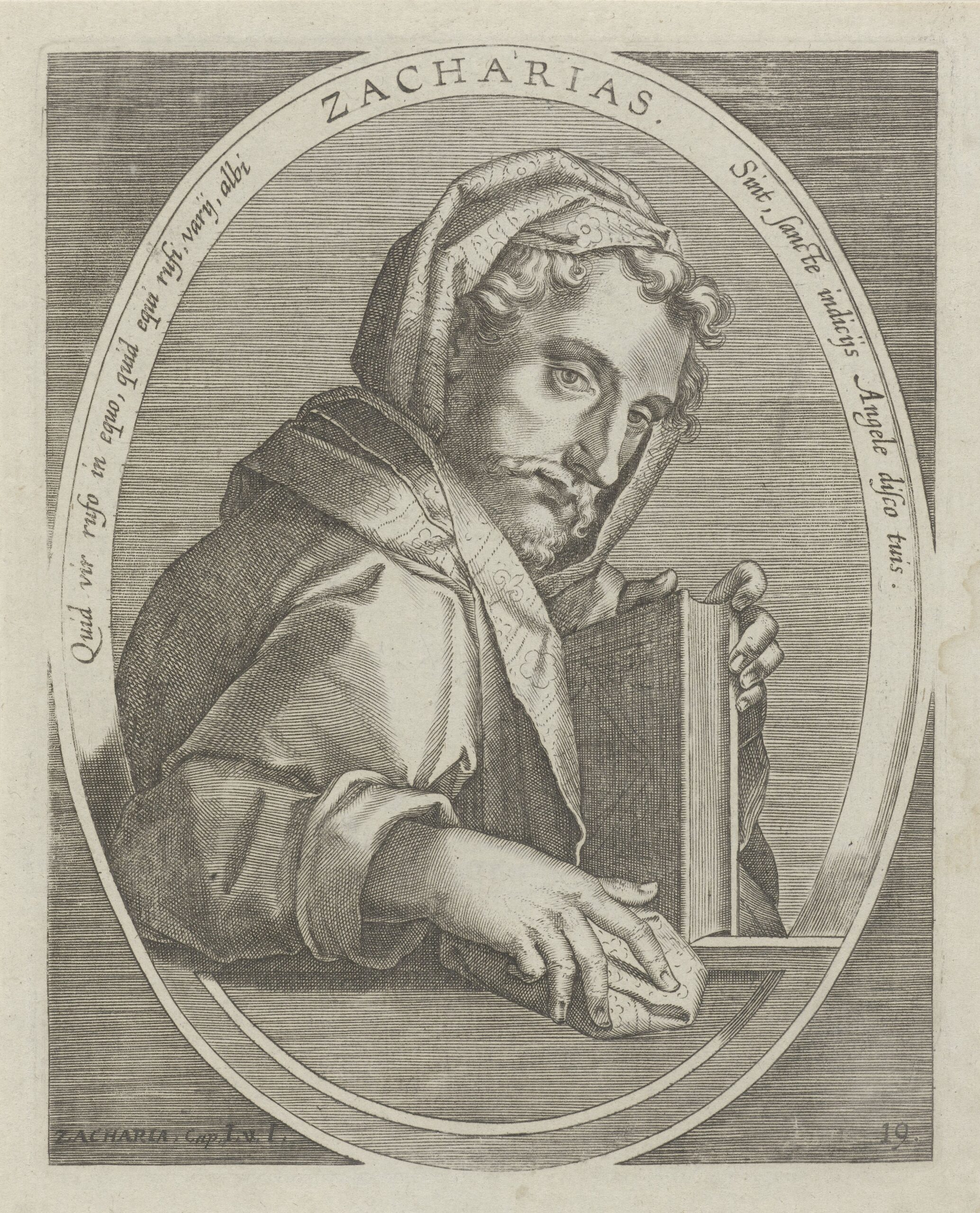
Some authors, such as Servant of God Dom Prosper Guéranger,6 attempt to justify the keeping of the Ember Day fasts by invoking the Prophet Zacharias (8:19): “Thus saith the Lord of hosts: The fast of the fourth month, and the fast of the fifth, and the fast of the seventh, and the fast of the tenth shall be to the house of Juda, joy, and gladness, and great solemnities: only love ye truth and peace.” The Fast of the Tenth Month mentioned by the Prophet, then, would correspond with the December Ember Days. The Fast of the Seventh Month, for its part, would correspond with the September Ember Days, September being the original seventh Roman month (septem, seven).7 The Fast of the Fourth Month would correspond with the Ember Days following the Feast of Pentecost which can fall between May (the third month) 10 and June (the fourth month) 13. If one were to assign a correspondence in the Roman liturgical calendar for the Fast of the Fifth Month, the fasts before the Feast of the Nativity of St. John the Baptist and before the Feast of Sts. Peter and Paul, both celebrated in late June, close to July, the original fifth Roman month, serve as possible candidates. It is not by coincidence, then, such authors would argue, that this passage of the Prophet is read as part of the Fourth Lesson on September’s Ember Saturday (Zach 8:14-19). Rather, it is the Church’s liturgy itself giving witness to the origin of these fasts.
It is clear, however, that there is not a perfect correspondence between the passage from Zacharias and the Roman liturgical calendar. This is most likely due to the Prophet being invoked as a justification for a practice which was already being kept rather than the passage serving as the inspiration of the practice. As was said above, the origin of the Ember Days is more likely a christianization of Roman agricultural celebrations at a very early date rather than the application of the writings of an Old Testament Prophet to the Christian liturgical year, although the Scripture text may have inspired the names of these christianized observances. Repeating what was said above, the Winter Ember Days seem to correspond with the December sowing festival, while the Summer Ember Days correspond with the feriæ messis (“for a bountiful harvest”), and the Autumn Ember Days with the feriæ vindimiales (“for a rich vintage”), with the Lenten, or Spring, Ember Days, which seem to be without an agricultural precedent, being added to balance out the year.8 Dom Guéranger himself notes that “in the early writers” there is mention “of the three times [of fasting] and not the four,”9 but argues this is because the Ember Days of Lent add nothing to the Lenten fast already being observed. Again, it seems more likely that the Spring Ember Days were added later, but by the time of Pope Gelasius (A.D. 492-496), to balance out the calendar.
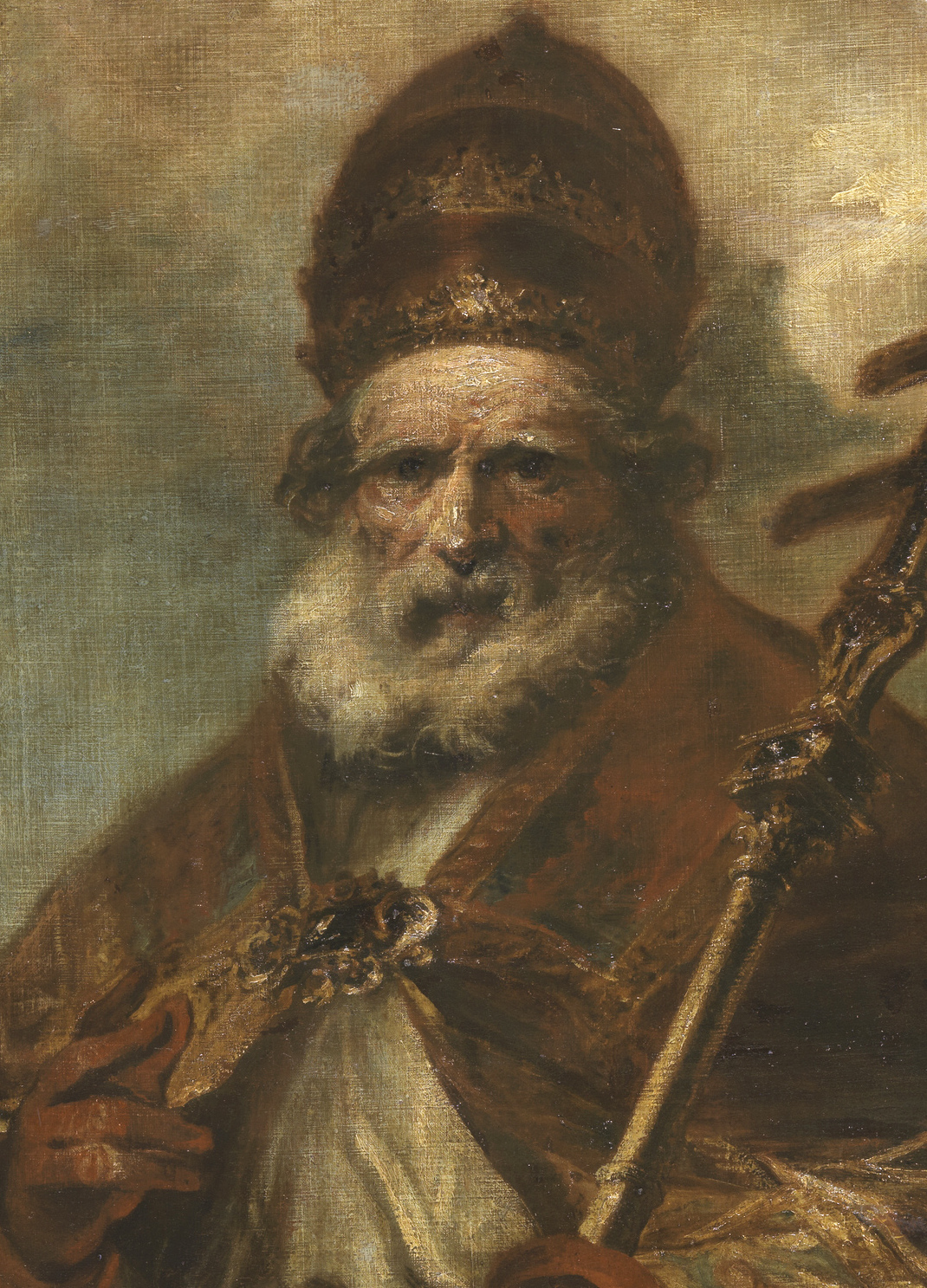
In Matins, the Church’s night office, for the First, Third and Fourth Sundays of Advent, prior to the changes made to the Breviary under Pope John XXIII (d. A.D. 1963),10 the readings for the second nocturns are taken from the sermons of Pope St. Leo the Great (d. A.D. 461) on the Fast of the Tenth Month.11 For the sake of the edification of the faithful as we enter into these Winter Ember Days and so that they may keep these days with the same spirit which was expected of the early Christians and which the Church perennially expected of her children by including them in her liturgy, I here present translations of these readings.
For the First Sunday of Advent from Leo’s Eighth Sermon on the Fast of the Tenth Month and Almsgiving:
Our Saviour Himself instructed His disciples concerning the times and seasons of the coming of the Kingdom of God and the end of the world, and He hath given the same teaching to the Church by the mouth of His Apostles. In connection with this subject then, Our Lord biddeth us beware lest we let our hearts grow heavy through excess of meat and drink, and worldly thoughts. Dearly beloved brethren, we know how that this warning applieth particularly to us. We know that that day is coming, and though for a season we know not the very hour, yet this we know, that it is near.
Let every man then make himself ready against the coming of the Lord, so that He may not find him making his belly his god, or the world his chief care. Dearly beloved brethren, it is a matter of every day experience that fulness of drink dulleth the keenness of the mind, and that excess of eating unnerveth the strength of the will. The very stomach protesteth that gluttony doth harm to the bodily health, unless temperance get the better of desire, and the thought of the indigestion afterward check the indulgence of the moment.
The body without the soul hath no desires; its sensibility cometh from the same source as its movements. And it is the duty of a man with a reasonable soul to deny something to his lower nature and to keep back the outer man from things unseemly. Then will his soul, free from fleshly cravings, sit often at leisure in the palace of the mind, dwelling on the wisdom of God. There, when the roar and rattle of earthly cares are stilled, will she feed on holy thoughts and entertain herself with the expectation of the everlasting joy.12
For the Third Sunday of Advent from Leo’s Second Sermon on the Fast of the Tenth Month and Almsgiving:
Dearly beloved brethren, with the care which becometh us as the shepherd of your souls, we urge upon you the rigid observance of this Fast of the Tenth Month [décimi mensis celebrándum esse jejúnium]. The month of December hath come round again, and with it this devout custom of the Church. The fruits of the year, which is drawing to a close, are now all gathered in, and we most meetly offer our abstinence to God as a sacrifice of thanksgiving. And what can be more useful than fasting, that exercise by which we draw nigh to God, make a stand against the devil, and overcome the softer enticements of sin?
Fasting hath ever been the bread of strength. From abstinence proceed pure thoughts, reasonable desires, and healthy counsels. By voluntary mortifications the flesh dieth to lust, and the soul is renewed in might. But since fasting is not the only mean whereby we get health for our souls, let us add to our fasting works of mercy. Let us spend in good deeds what we take from indulgence. Let our fast become the banquet of the poor.
Let us defend the widow and serve the orphan; let us comfort the afflicted and reconcile the estranged; let us take in the wanderer and succour the oppressed; let us clothe the naked and cherish the sick. And may every one of us that shall offer to the God of all goodness of the sacrifice of this piety of fasting and alms be by Him fitted to receive an eternal reward in His heavenly kingdom! We fast on Wednesday and Friday; and there is likewise a Vigil on Saturday at the Church of St. Peter, that by his good prayers we may the more effectually obtain what we ask for, through our Lord Jesus Christ, Who with the Father and the Holy Ghost, liveth and reigneth, God, world without end. Amen.
For the Forth Sunday of Advent from Leo’s First Sermon on the Fast of the Tenth Month and Almsgiving:
Dearly beloved brethren, if we study attentively the history of the creation of our race, we shall find that man was made in the image of God, that his ways also might be an imitation of the ways of his Maker. This is the natural, real, and highest dignity to which we are capable of attaining, that the goodness of the Divine nature should have a reflection in us, as in a glass. As a mean of reaching this dignity, we are daily offered the grace of our Saviour, for as in the first Adam all men are fallen, so in the Second Adam can all men be raised up again i Cor. xv. 22.
Our restoration from the consequences of Adam’s fall is sheer mercy of God, and nothing else; we should not have loved Him unless He had first loved us 1 John iv. 19, and scattered the darkness of our ignorance by the light of His truth. This the Lord promised by the mouth of Isaiah, where He saith: Isa. xlii. 16, I will bring the blind by a way that they knew not, and I will lead them in paths that they have not known I will make darkness light before them, and crooked things straight. These things will I do unto them and not forsake them. And again: Isa. lxv. 1, 2; Rom. x. 20, I was found of them that sought Me not; I was made manifest unto them that asked not after Me.
And we know from the Apostle John how God fulfilled His promise, 1 John v. 20. We know that the Son of God is come, and hath given us an understanding, that we may know Him That is True, and be in Him That is True, even in His Son. And again: iv. 19, Let us therefore love God, because He first loved us. For His great love then wherewith he hath loved us, Eph. ii. 4, God reneweth His likeness in us. And, moreover, in order that He may find in us the reflection of His goodness, He giveth us that whereby to work along with Himself, (Who worketh all in all,) lighting, as it were, candles in our dark minds, and kindling in us the fire of His love, to make us love not Himself only, but likewise, in Him, whatsoever He loveth.
Rev. Cav. William Rock, FSSP, SMOCSG was ordained in the fall of 2019 and was invested as an Ecclesiastical Knight of the Sacred Military Constantinian Order of St. George in the summer of 2025. He currently resides at the FSSP Canonical House of St. Casimir in Nashua, NH, and ministers at St. Stanislaus parish.
In support of the causes of Blessed Maria Cristina, Queen, and Servant of God Francesco II, King

- Talley, T. J. The Origins of the Liturgical Year. (New York: Pueblo Books, 1986), pp. 149-151.
- The old Catholic Encyclopedia, s.v. “Ember Days.”
- Whitaker’s Words, s.v. “Sementivus.”
- Whitaker’s Words, s.v. “Decem.”
- The old Catholic Encyclopedia, s.v. “New Year’s Day.”
- Guéranger, Prosper. The Liturgical Year, vol. 1 (Advent). Trans. Shepherd, Laurence. (Fitzwilliam: Loreto
Publications, 2000), pp. 218-221. - Whitaker’s Words, s.v. “Septem.”
- The old Catholic Encyclopedia, s.v. “Ember Days.”
- Guéranger, p. 219.
- In the changes made by Pope John XXIII in 1960, Sunday Matins was reduced to one nocturn and the readings of the second nocturns omitted. With respect to the matter at hand, it seems to be a great loss that the Winter Ember Day sermons of Leo, which testify to their antiquity, are no longer part of the Church’s official liturgy.
- The corresponding readings for the Second Sunday of Advent are from St. Jerome’s commentary on Isaias 11, touching particularly on the Root of Jesse, from which the readings of the first nocturn are drawn.
- The translations of Leo’s sermons are taken from the Divinum Officium Project with modifications in some places.
December 14, 2025







FSSP 2026 Calendar